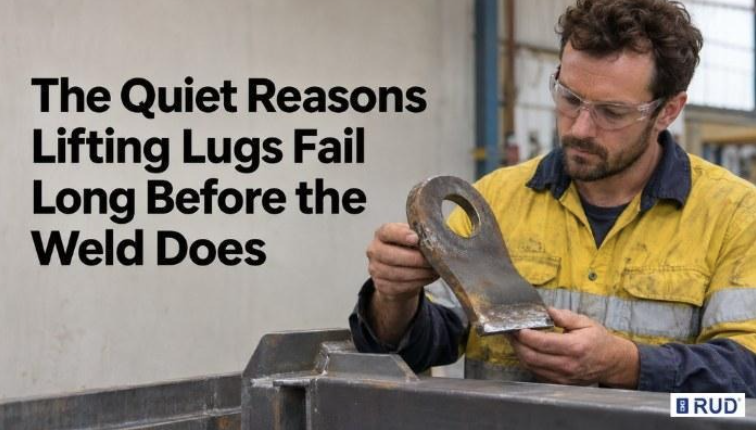
Picture a lug with a current certificate and a passed proof load coming back from a lift, visibly bent. Nothing on the paperwork explains it. Your rigging equipment checked out, and the load sat within its working load limit (WLL).
If this sounds like your last lift, the weld most likely took the blame for a load direction problem. At RUD Australia, we’ve supplied tested lifting points to mining, defence and infrastructure projects since 1984.
The weld is usually the last part to go. Lifting lugs start failing at the pin hole and base, where side loading and dynamic forces do the early damage. We’ll trace how this rigging failure develops, what to check on a pad eye, and when to switch to rotating points.
How Side Loading Breaks Lifting Lugs Before the Weld Gives Way
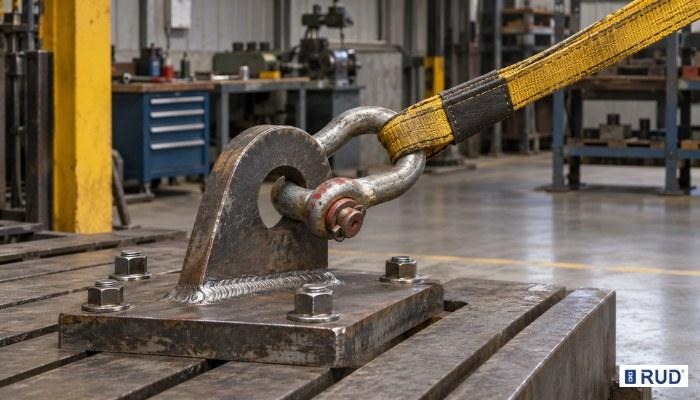
Engineers design a lifting lug to take a straight, in-line pull along the length of its plate. Side loading hits it from an angle and pushes on the flat side of the plate, where it bends far more easily. The base takes that bending stress long before the weld shows a single crack.
Two lessons from the field show how side loading plays out, first on paper and then on the hook.
The Lug That Passed on Paper
So how does a lug pass its proof test and still bend? Many calculations for lifting devices only check that in-line pull.
In a Brisbane fabrication yard, one sling on an off-centre load can shift as it takes up tension. That movement drags the pad eye across its thin face (you’ll often see the shackle roll onto its side).
Through our work on lifting point selection, we’ve found this bending hits the base of lifting lugs first. The marine industry’s IMCA saw the same weak point in its safety flash: Failure of Lifting Padeye. A 30mm padeye there loaded straight into an unreinforced 5mm box section underneath.
Dynamic Forces Nobody Planned For
Dynamic forces are the extra loads from swing, sudden stops and snatching (slack rigging snapping tight), on top of static weight. During lifting operations, suspended loads sway every time the crane turns or brakes. Each swing pulls the lug off its line.
Closer to home, WorkSafe Queensland’s alert Risks Associated with Lifting Formwork says side load climbs as the included sling angle widens. Its advice is to keep that angle under 90 degrees.
What to Check on a Pad Eye During Lifting Lug Inspection
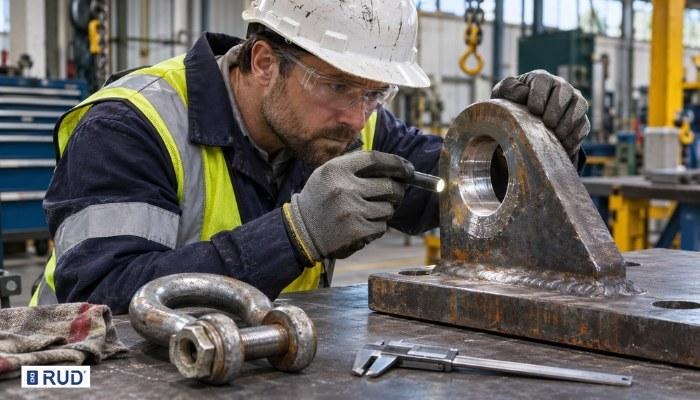
A lifting lug inspection should cover the pad eye’s pin hole, bearing surface, base and shackle fit. You might be wondering how to tell side loading apart from normal wear on rigging equipment.
Based on our hands-on experience with lifting points, the shape and direction of the damage give it away. Take the shackle off before you start, because it hides the most worn part of the hole.
Work through each area in this order:
- Pin Hole Shape: An off-centre oval worn into the pin hole shows which direction the side load came from. Record the stretch direction to correct the sling angle on the next lift.
- Bearing Surface and Base: Look for one-sided wear, burrs or sharp edges in the hole that could cut slings. At the base, watch for bending and cracked paint at the weld toe (where the weld meets the plate).
- Shackle Fit and Records: Match the shackle size and WLL to the pad eye to keep the connection square under load. Quarantine undocumented lugs, and get an engineer to verify doubtful ones before the next lift.
Pull any lug that fails these checks from service, and keep it out of your lifting operations until it passes.
Specifying Rotating Lifting Equipment When Load Direction Changes
If the load changes direction mid-lift, you need a rotating point, not a fixed lug. A rotating point turns to follow the pull, which keeps the force in line with the ring.
If your team flips or turns loads during rigging tasks, a fixed lug will take side load on almost every lift. Across years of complex lifts, we’ve seen rotating points save your crew from re-rigging whenever the angle shifts.
For welded applications, RUD Australia’s VLBS Load Ring for Welding can replace fixed lifting lugs with a forged alloy steel ring. It pivots through 180 degrees, takes load from multiple directions and carries a 4:1 safety factor (four times its WLL before breaking).
Bolt-on options like the VLBG and VRS-F STARPOINT rotate to suit the load where welding isn’t practical. Not sure which one fits your site? RUD Australia’s chartered engineers in Brisbane can review your lifting equipment and recommend the right point for the load. You can shortlist options first with RUD’s online lifting point configurator.
Safer Lifting Operations Start With Load Direction
Now that you’ve seen where lug damage starts, the next lift is the place to act on it. Damage to lifting lugs usually traces back to load direction, and the weld gives way last.
Keep three habits on every job. Plan your sling angles before the lift, read the pin hole during each inspection, and specify rotating points wherever the load turns. Each one lowers your risk and keeps good gear in service for longer.
Talk to RUD Australia’s engineers in Brisbane if you’re planning a lift where the load angle changes partway through. We’ll help you choose lifting points that move with the load instead of fighting it.
Read more : Simple Ways to Help Students Become Independent Learners

Rehana Qmar is the admin and author of QuestionsBoyfriend.com. She researches and writes helpful Questions, Responses, and Message ideas for relationships.
Her content is based on real communication needs, simple language, and practical examples to help readers express feelings clearly and confidently.