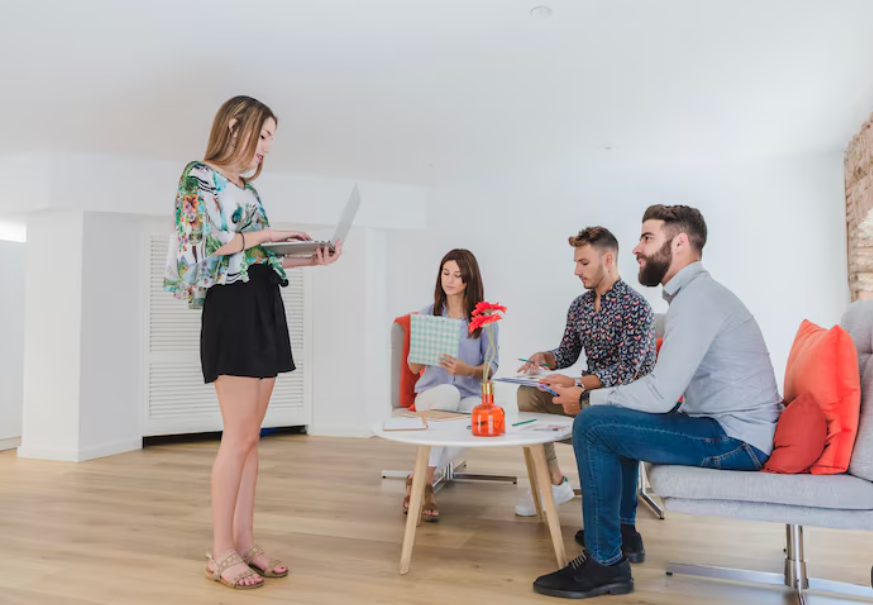
A room labeled as a formal dining area might become a home office, a creative studio, or a place for children to play. A spare bedroom could welcome guests today and accommodate a family member later. These possibilities help explain the appeal of flexible living spaces.
Homebuyers bring different routines, priorities, and plans to a property. Spaces that support several uses give them room to imagine how a home could work now and adapt over time. The appeal comes from practical choices: where to work, how to create privacy, and what to do when household needs change.
Different Buyers See Different Possibilities
The same room can offer value to several types of buyers. A person living alone may see space for exercise equipment or a personal project. A couple may imagine separate work areas. A family may need somewhere for homework, toys, or visiting relatives.
A room with useful dimensions, accessible power outlets, and a sensible position within the home can accommodate many of these activities.
That versatility broadens how people experience a property during a viewing. Instead of assessing whether their life matches the current furniture arrangement, they can consider alternative ways to use the space.
Work and Home Life Need Different Settings
For buyers who work or study at home, flexibility can help establish a workable boundary between focused tasks and everyday household activity.
A quiet spare room may serve as an office during the week and a guest room occasionally. In a smaller home, a well-positioned desk or a closable workstation can provide a practical solution.
Privacy matters as much as floor area. A spacious corner beside a television may be less useful for calls than a modest room with a door.
Buyers considering these arrangements often look beyond whether a desk fits. Lighting, ventilation, background noise, and access to sockets affect whether the space works comfortably.
Family Needs Change Over Time
A household rarely uses its home in exactly the same way forever. Young children may benefit from a play area close to the main living room. Older children may prefer a quieter place to study or spend time with friends.
Flexible rooms allow those uses to evolve. A playroom can become a study, while a guest room may later accommodate a relative.
Adaptability can also help when household members have different schedules. Separate usable areas make it easier for someone to rest while another person watches television, works, or entertains visitors.
However, a room’s suitability depends on its actual features. Converting a space into a bedroom or a separate living unit may involve local requirements and approvals.
Smaller Homes Can Use Space More Efficiently
Flexibility is especially appealing when floor space is limited. A room that serves several compatible purposes can make a compact home feel more useful.
A dining table might support meals, homework, and occasional projects. A guest room with a foldaway bed can remain available for everyday activities. Built-in storage can keep the items associated with each use organized.
The arrangement needs to be convenient. If changing functions requires moving heavy furniture or clearing numerous belongings every day, the room may become frustrating.
Successful flexibility depends on making transitions simple enough for ordinary use.
Open Layouts Offer Opportunities and Trade-Offs
Open living areas can accommodate different furniture arrangements and allow activities to expand when needed. A dining area might hold a larger gathering, while movable seating can support conversation or family activities.
Yet openness does not automatically create versatility. Noise travels, visual distractions remain visible, and private conversations can be difficult.
A combination of shared space and smaller enclosed rooms may offer more options for some households. Sliding doors, suitable partitions, or thoughtful furniture placement can also help define zones, depending on the property.
The most useful layout allows people to choose when to share space and when to separate activities.
Storage Makes Adaptability Practical
Multipurpose rooms need somewhere for their equipment and belongings. Without storage, work papers, bedding, toys, and hobby supplies can compete for the same surfaces.
Cupboards, shelving, and furniture with built-in storage make it easier to put one activity away before beginning another.
Storage should match the intended uses. Shallow shelves may suit books but offer little help with bulky bedding or sports equipment. Accessible, appropriately sized storage supports flexibility without adding unnecessary clutter.
Clear Layouts Help Buyers Imagine Their Own Lives
During a viewing, a room should have an understandable purpose while leaving its alternatives visible. Overcrowding a space with equipment for every possible activity can make it seem cramped.
A simple arrangement often communicates more: a guest bed alongside a compact desk, for example, shows two compatible uses without overwhelming the room.
Buyers can then assess the fundamentals—dimensions, doors, windows, privacy, and circulation—and decide whether the space fits their priorities.
Flexible living spaces appeal because they offer choices grounded in everyday life. A home that accommodates changing routines and responsibilities gives different buyers something valuable to imagine: a place that can continue working for them as their needs develop.
Read more : 150 Ways ‘’ How to Respond to I Miss You ’’ (For Every Situation & Person) (2026)

Rehana Qmar is the admin and author of QuestionsBoyfriend.com. She researches and writes helpful Questions, Responses, and Message ideas for relationships.
Her content is based on real communication needs, simple language, and practical examples to help readers express feelings clearly and confidently.