
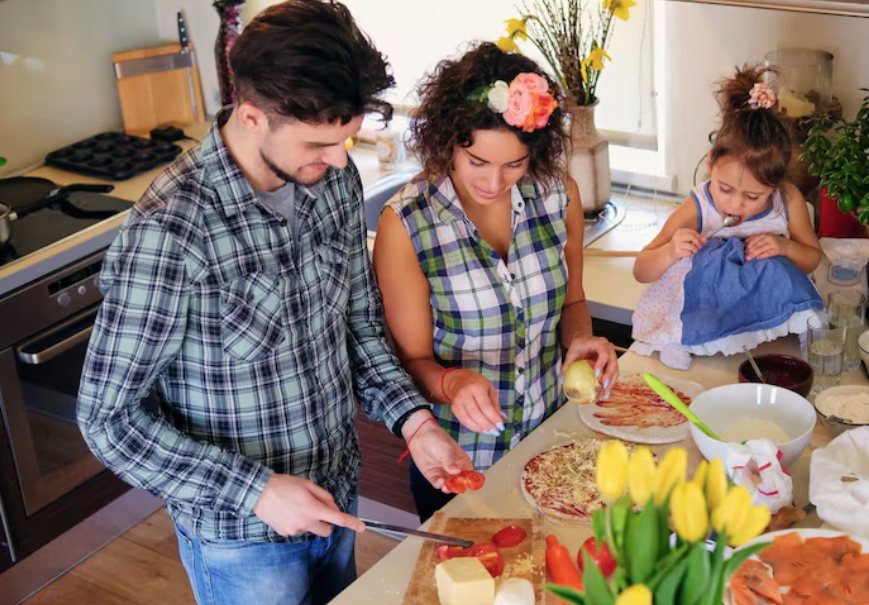
A handwritten recipe can hold more than instructions for preparing a meal. A faded stain may recall years of holiday baking, while a note in the margin reveals how someone adjusted the dish to suit the family’s tastes. Even the instruction “add enough flour” can bring back the voice of a relative who cooked by instinct.
Family recipes carry traces of the people who prepared them and the circumstances in which they lived. Passed from one kitchen to another, they preserve memories of celebrations, everyday routines, migration, and resourcefulness. Cooking these dishes gives each generation a way to experience part of the family’s past.
Everyday Meals Become Lasting Memories
The recipes families treasure are not always elaborate. A simple lentil dish, breakfast bread, or bowl of soup may hold more emotional meaning than a complicated celebration meal.
Their significance comes from repetition and association. A particular dish might have been waiting after school or served whenever relatives arrived unexpectedly. Its familiar smell becomes connected with a person, a place, or a feeling of being welcomed.
Years later, preparing that food can bring those details back into focus. Someone remembers the sound of a spoon against a pot, the chair where a grandparent sat, or the argument over who received the crispiest piece.
These ordinary moments give a recipe its personal history.
Recipes Carry Cultural Knowledge
Family cooking can preserve knowledge that rarely appears in formal records. The way rice is washed, dough is shaped, or spices are added may reflect regional practices learned through observation.
Recipes also carry language. A dish may retain its original name even when younger family members speak a different language at home. Measurements, utensils, and cooking expressions can preserve further connections to a family’s roots.
However, one household’s version does not represent an entire culture. Neighboring families may prepare the same dish differently, each considering its own method familiar and correct.
Those differences are part of the story. They reveal how shared traditions take on a distinct character within individual homes.
Migration Leaves Its Mark on the Plate
When families move, their recipes often move with them. Ingredients may be difficult to find, kitchens may have different equipment, and work schedules may leave less time for preparation.
A cook might replace a familiar vegetable with a local variety or adapt a dish for an oven instead of a traditional stove. Over time, the altered version becomes the one children recognize.
These changes can preserve evidence of a family’s journey. A recipe may combine techniques from one place with ingredients from another, showing how people maintained continuity while building a different life.
Asking why a particular substitution became standard can uncover stories that the ingredient list alone cannot explain.
Resourcefulness Shapes Family Favorites
Some beloved dishes began as practical answers to limited ingredients, seasonal abundance, or the need to use leftovers.
Stale bread could become pudding. Extra rice might become the next morning’s breakfast. A small amount of meat could flavor a larger pot of vegetables or grains.
Later generations may remember these foods mainly as comforting favorites. Learning how they developed adds another layer of meaning, revealing the planning and creativity involved in feeding a household.
The story deserves to include that work. Shopping, preparing ingredients, tending a stove, and making food stretch were substantial responsibilities, even when they became so familiar that others barely noticed them.
Much of the Recipe Lives Beyond the Page
Written instructions often leave out the knowledge that makes a dish work. An experienced cook knows how dough should feel, what gently browned onions look like, or when a sauce has reached the right consistency.
This is why cooking together can be so valuable. Watching, tasting, and asking questions reveals details that are difficult to capture through measurements alone.
Questions such as “How do you know it is ready?” or “Who taught you to make this?” invite both practical guidance and personal memories. Recording those answers can preserve the cook’s reasoning as well as their method.
Each Generation Adds Something
Family recipes continue to develop. Someone reduces the sweetness, adjusts the portion size, or changes an ingredient to accommodate a dietary need. Another person recreates a dish from memory because no written version survives.
Keeping a record of the earlier method alongside newer adaptations allows both to remain available. It also makes the changes part of the family history rather than leaving future cooks to guess.
Adding a name, date, occasion, or short anecdote can turn a recipe collection into a more meaningful record. Photographs and brief recordings can preserve gestures and voices that written directions miss.
When a family prepares an inherited dish, the result may never taste exactly as remembered. Different ingredients, kitchens, and hands will leave their mark. Yet the act of cooking still creates a connection: someone takes the time to learn, remember, and pass the story forward.
Read more : How to Explore a New City Through Its Neighborhood Markets

Rehana Qmar is the admin and author of QuestionsBoyfriend.com. She researches and writes helpful Questions, Responses, and Message ideas for relationships.
Her content is based on real communication needs, simple language, and practical examples to help readers express feelings clearly and confidently.
1 comment