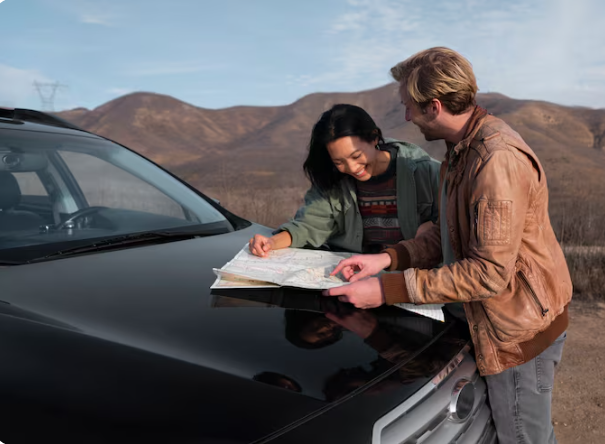
A weekend road trip offers a welcome break from daily routines. However, an unexpected breakdown can quickly turn a relaxing escape into a frustrating experience. Spending a little time checking your car before departure helps you spot problems, prepare for the journey, and travel with greater confidence.
You do not need advanced mechanical knowledge to complete several useful checks. Your owner’s manual, a tyre pressure gauge, and a careful walk around the vehicle are good starting points.
Check Tyre Pressure and Condition
Tyres affect grip, braking, comfort, and fuel consumption. Check their pressure when they are cold, ideally before driving or after the car has been parked for several hours. Use the recommended pressure listed on the driver’s door placard or in the owner’s manual. The figure printed on the tyre sidewall is not the vehicle’s recommended operating pressure.
If you are carrying extra passengers and luggage, check whether the manufacturer specifies a different pressure for heavier loads.
Inspect each tyre for cuts, cracks, bulges, embedded objects, and uneven wear. Check tread depth across the tyre rather than looking at just one section. A visible bulge or significant damage needs professional attention before the trip.
Check the spare tyre too. If your car uses a puncture repair kit, confirm that the compressor works and the sealant is within its expiry date.
Inspect Essential Fluid Levels
Park on level ground and follow the owner’s manual when checking fluids.
Start with engine oil. Depending on the vehicle, you may use a dipstick or an electronic display. The level should remain within the specified range. If topping up is necessary, use the correct oil specification and avoid overfilling.
Check the coolant reservoir when the engine is cold. Never remove a hot cooling-system cap because pressurised coolant can cause serious burns. A low level or repeated need for topping up may indicate a leak that requires inspection.
Look at the brake fluid reservoir without unnecessarily opening it. If the level is below the minimum mark, arrange an inspection rather than simply adding fluid. Finally, fill the windscreen washer reservoir with a suitable washer solution.
Pay Attention to Braking Performance
Before heading onto a motorway or unfamiliar road, consider how the brakes have been behaving. Grinding sounds, persistent squealing, vibration, pulling to one side, or a soft pedal deserve attention.
During normal driving on a quiet, safe road, check that braking feels predictable and consistent. Avoid sudden or aggressive braking tests.
If a brake warning light stays on after the parking brake is released, consult the owner’s manual and have the problem assessed before continuing your journey.
Test Lights, Wipers, and Visibility
Walk around the car and check the headlights, indicators, hazard lights, and rear lights. Ask someone to help check the brake lights, or use their reflection against a suitable surface.
Clean the windscreen inside and outside, along with mirrors and light lenses. Dirt and streaks can make glare worse, especially after dark.
Run the wipers with washer fluid. Replace blades that leave persistent streaks, skip across the glass, or have split rubber. Check that the washers spray properly and that the windscreen demister works.
Check the Battery and Warning Lights
A slow engine start can be an early sign of battery trouble. With the engine switched off, look for obvious corrosion, damage, or a loose battery mounting without touching exposed terminals.
If starting has recently become unreliable, have the battery and charging system tested before departure.
Observe the dashboard after starting. Warning lights normally illuminate briefly during system checks, but lights that remain on need attention according to the owner’s manual. Do not assume that a warning is harmless because the car still seems to drive normally.
Look for Leaks and Unusual Changes
Check beneath the parked car for fresh fluid patches. Clear water after using the air conditioning is often normal condensation, but oily patches, coloured fluid, or a strong fuel smell need investigation.
Also consider recent changes in the way the car drives. Unusual steering vibration, overheating, new noises, or reduced power are reasons to seek advice before a longer journey.
If a scheduled service is due, arrange it with enough time to address any findings.
Pack and Load Carefully
Carry the equipment supplied for your vehicle, including the jack, wheel tools, towing eye, or repair kit where applicable. Useful additions include a torch, first-aid kit, drinking water, phone charger, and roadside assistance details.
Secure luggage so it cannot move during sudden braking. Place heavier bags low down and avoid blocking the driver’s view. Stay within the vehicle’s load limits, including any roof-rack restrictions.
Before leaving, confirm that you have sufficient fuel or charge for the first stage of the route. With the car checked, luggage secured, and any concerns addressed, you can begin your weekend trip with fewer avoidable surprises.
Read more: How Environmental Details Make Game Worlds Feel Alive

Rehana Qmar is the admin and author of QuestionsBoyfriend.com. She researches and writes helpful Questions, Responses, and Message ideas for relationships.
Her content is based on real communication needs, simple language, and practical examples to help readers express feelings clearly and confidently.