
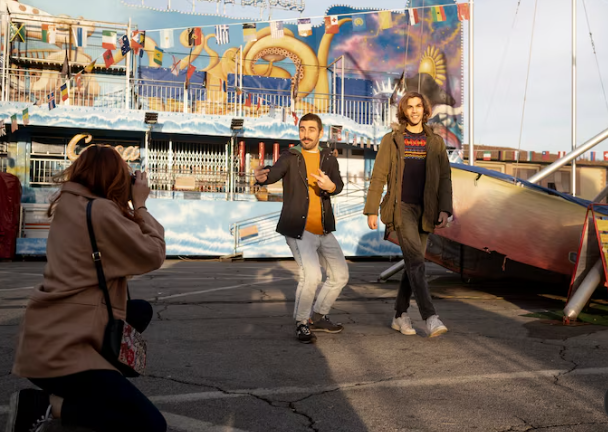
A familiar street can feel completely different when a mural appears on a blank wall. A sculpture can turn an overlooked square into a meeting place. Even a temporary light installation can encourage people to stop, look around, and notice buildings they usually walk past.
Public art changes cities because it changes how people pay attention to them. It adds stories, invites participation, and gives shared spaces a character that architecture and infrastructure alone cannot provide. Through these encounters, a city becomes more than somewhere to travel through. It becomes somewhere people feel connected to.
Turning Everyday Routes Into Discoveries
Much of urban life follows a routine. People take the same roads to work, wait at familiar crossings, and pass buildings without noticing their details. Public art interrupts that repetition.
A colorful mosaic beside a bus stop or an unexpected sculpture along a footpath creates a reason to pause. It can draw attention to the shape of a wall, the history of a neighborhood, or the movement of sunlight across a square.
These small encounters make everyday journeys more engaging. Art does not need to be monumental to have an effect. A carefully placed piece can transform a brief walk into an experience of discovery.
Giving Places a Distinct Identity
Cities often share similar features: shopping streets, office towers, apartment blocks, and transport hubs. Public art helps individual neighborhoods express what makes them different.
A mural might celebrate a local musical tradition. A sculpture might reference the workers who shaped an industrial district. Community-designed tiles might preserve residents’ memories of a changing street.
When these works grow from local experiences, they give places an identity that feels specific and recognizable. Residents gain landmarks that reflect their lives, while visitors encounter stories they might otherwise miss.
However, representing a community requires listening. Art chosen without meaningful local involvement can overlook important histories or present a narrow version of neighborhood identity.
Making Art Part of Everyday Life
Public art allows people to encounter creative work without planning a gallery visit or buying a ticket. It brings artistic expression into parks, stations, streets, and other shared settings.
This accessibility creates opportunities for people with different interests and backgrounds to experience the same work. Someone might stop to examine its materials, while another person connects with its subject or simply enjoys its colors.
There is no single required response. Public art can support casual enjoyment as well as deeper reflection.
Its setting matters, too. Clear paths, accessible viewing areas, and thoughtful placement help more people experience a work comfortably.
Creating Opportunities for Connection
Public artworks can become shared reference points. People arrange to meet beside a sculpture, bring visitors to a favorite mural, or return to an installation at different times of day.
Participatory projects create further opportunities for connection. A community painting project, for example, can bring neighbors together through the process of making something visible and lasting.
Art can also make public spaces feel more welcoming, particularly when combined with seating, shade, lighting, and accessible paths. The artwork provides a point of interest; the surrounding design gives people a reason to stay.
Together, these features can support conversation and shared use of a space.
Encouraging Conversation About History
Public art influences whose stories appear in the urban landscape. Monuments, memorials, and murals communicate what a city chooses to remember and celebrate.
Some works honor widely recognized events. Others bring attention to experiences that have received little public recognition. Contemporary installations can also question older narratives and invite people to reconsider familiar symbols.
These conversations are not always comfortable. Residents may disagree about a work’s meaning, location, or use of public money. Such disagreements reveal how strongly people care about shared spaces.
Open discussion and transparent decisions help cities respond thoughtfully to those concerns.
Changing How We Notice Urban Space
Artists work with more than objects and images. They also work with scale, sound, light, movement, and surroundings.
A reflective sculpture can reveal a skyline from an unfamiliar angle. A sound installation can draw attention to an overlooked passageway. A temporary projection can make a building’s architectural details visible after dark.
These experiences encourage people to see urban space as something changeable. A wall can carry a story. A square can host collective expression. A routine route can offer surprise.
Building a Lasting Relationship With Place
Public art succeeds when it develops a meaningful relationship with its surroundings and the people who use them. That requires thoughtful selection, community involvement, suitable materials, and ongoing care.
Its greatest contribution is often personal: a landmark associated with friendship, a mural that reflects someone’s heritage, or an installation that makes an ordinary evening memorable.
By giving people reasons to notice, question, gather, and remember, public art deepens the experience of city life. It helps turn shared space into a place that matters.
Read more: Why Repairable Technology Matters for Product Longevity

Rehana Qmar is the admin and author of QuestionsBoyfriend.com. She researches and writes helpful Questions, Responses, and Message ideas for relationships.
Her content is based on real communication needs, simple language, and practical examples to help readers express feelings clearly and confidently.
1 comment